
Digital Maturity of Professional Firms: Your Clients Are Speeding Up. Is Your Firm?
Clients of professional accounting and tax firms made a digital leap in just one year. Here's what the data shows and how to organize the firm to keep pace.
TL;DR: in just over a year, the clients of professional accounting and tax firms have sharply accelerated their digitalization. The question is whether their firm keeps pace. And the real issue is no longer which software to buy, but who inside the firm is responsible for each step once the workflow goes digital.
What's happening with the digital maturity of professional firms?
For years, the story ran the other way: the firm was ahead, and the client — the small business, the freelancer — dragged its feet with spreadsheets and loose PDF folders. That order is flipping, at least partially.
The Barómetro de la Asesoría 2026 (Advisory Firm Barometer 2026), published by Wolters Kluwer Tax & Accounting Spain, puts numbers on it. The share of client businesses of professional firms with a low level of digitalization dropped to 22% in 2026, down from 39% in 2025. The medium level rose from 55% to 68%, and businesses with a high level of digital maturity nearly doubled, reaching 10%.
One year. That's how long it took a large part of that client base to make the jump. It's not a cosmetic change: it means the client invoices through the cloud, collects payments through a gateway, files documents digitally, and expects the firm to keep up.
When the client moves faster than the firm
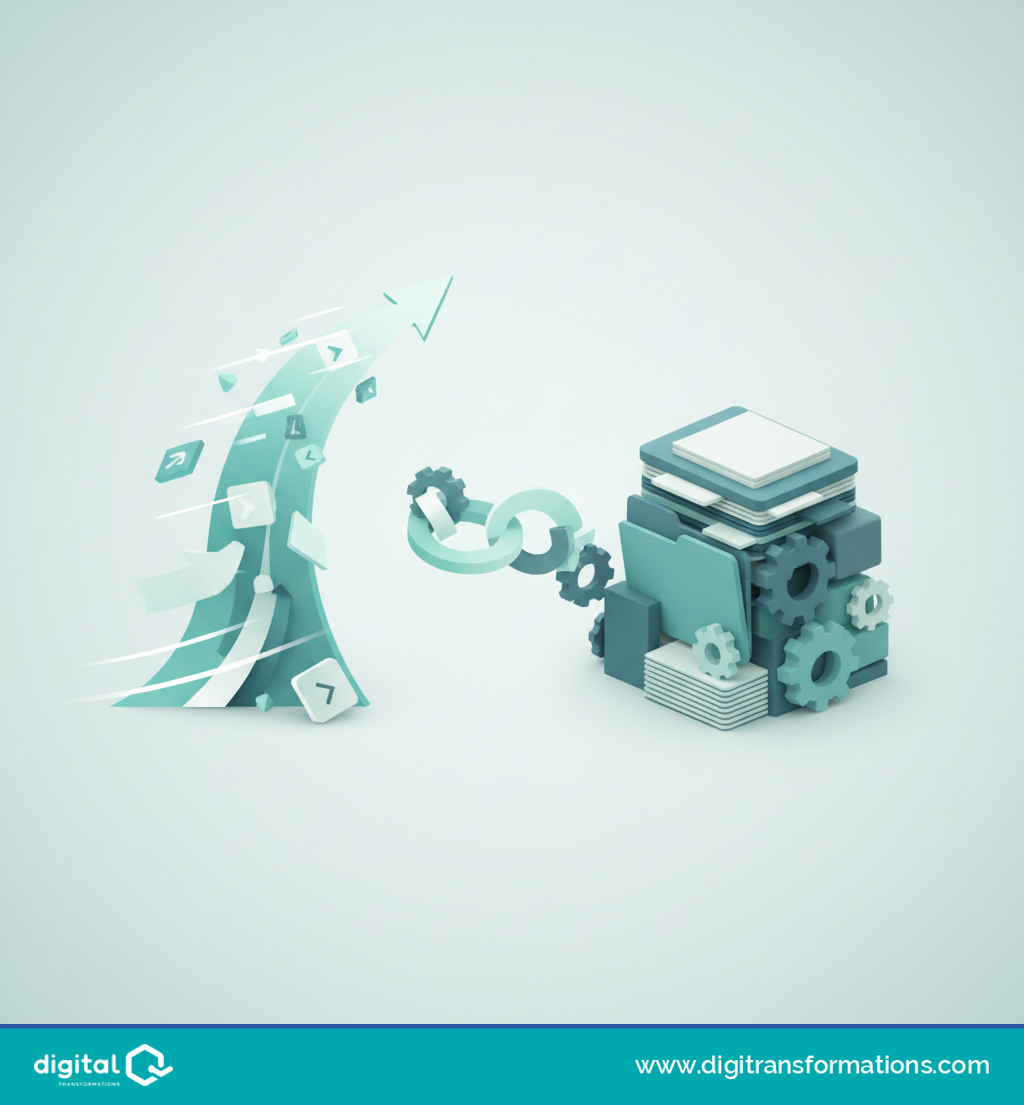
Picture a four-lane highway that suddenly narrows to a single lane right at the roundabout leading into the firm's office. That's what happens when an already-digitalized business sends its paperwork to a firm that still asks for the PDF by email and types it into its management software by hand.
The jam doesn't show up on the highway. It shows up at the roundabout. And in this case, the roundabout is the firm.
A client who already automated their invoicing doesn't understand why their advisor still asks "can you resend that invoice, it didn't come through properly?" And, honestly, they have a point.
The typical mistake: buying software before assigning the work
This is where many firms get the order wrong. They buy a tool — accounting software, document management, AI — assuming the technology alone will close the gap. Then the rollout stalls halfway because nobody has made clear who checks what comes in, who validates doubtful data, or who decides when a process moves from manual to automatic.
The tool isn't the problem. The problem shows up when three people in the firm each assume someone else is handling a task that, in practice, nobody owns.
Sound familiar? It's the same pattern we see again and again across small and mid-sized businesses, not only in advisory firms: technology gets purchased, and everyone assumes the roles will sort themselves out. They don't.
Who does what once the workflow goes digital
A firm that wants to keep pace with its clients needs more than new software. It needs clarity, inside its own team, about who owns what in the new workflow: who reviews invoices that arrive already processed, who handles what the AI can't resolve, who keeps each client's master data clean, and who decides when a process no longer needs step-by-step supervision.
That's not a question of which app to install. It's a question of internal organization — and it's exactly what Digital Transformations' Digital Workforce Guide works through: how to build, inside your own firm, a team — people and automated processes working together — with clear responsibilities instead of tasks that "someone handles," without anyone actually owning them in writing.
If your client has already digitalized their operations, does your firm know who does what to keep up? If the answer isn't immediate, that's probably the next step to take, before any new piece of software.
Download the Digital Workforce Guide and start assigning that work with a clear structure: https://www.digitransformations.com/guia-equipos-digitales
We put AI to work in your business. https://www.digitransformations.com/
Source: Wolters Kluwer Tax & Accounting Spain, Barómetro de la Asesoría 2026, June 30, 2026.
Content developed with AI assistance and reviewed by the Digital Transformations editorial team
Frequently asked questions
What is the digital maturity of a professional firm?
It's the degree to which an advisory or accounting firm has adopted digital tools (cloud invoicing, e-signature, document management, AI) in its daily work, instead of relying on manual processes like email and loose PDFs.
Why are my clients more digitalized than my own firm?
Because many small businesses have made the jump in recent months, pushed by e-invoicing, digital banking, and everyday use of cloud tools, while the firm is still tied to processes that worked fine five years ago.
What is a digital workforce inside an advisory firm?
It's the clear split of responsibilities between the people in the firm and the automated processes it already uses: who validates data, who handles what the AI can't resolve, and who decides when a process stops needing step-by-step supervision.
What should my firm do first to digitalize?
Before buying new software, define who is responsible for each step of the digital workflow. Without that split, the technology stays half-implemented because nobody owns the exceptions.
Does AI replace the professional advisor?
It doesn't replace professional judgment on decisions that affect the client. What changes is that the repetitive part of the work becomes automated, so the advisor spends more time interpreting and less time typing.
Related articles
The First Call That Decides If a Client Stays: AI Training for Customer Service Teams
At accounting and advisory firms, the hardest first call usually lands on the most junior person on the team. Rehearsing it first, with AI, changes the outcome.

Can Your Firm Use ChatGPT With Client Data? What GDPR and the AI Act Require
More professionals use ChatGPT for everyday tasks. But entering client data in the free version can break GDPR and, since August 2026, the AI Act too.
AI Is Already Saving Your SME Time. Why Isn't It Selling More?
83.8% of SMEs using AI see benefits, but only 21.6% see more sales (Hiscox, 2025). AI saves time; the next step is bringing it into customer-facing processes.