Which Processes to Automate in a Small Business: The 5 Back-Office Tasks to Tackle First
Onboarding, HR requests, internal support, document management, and reporting: the 5 back-office processes that benefit fastest from AI automation in a small business.
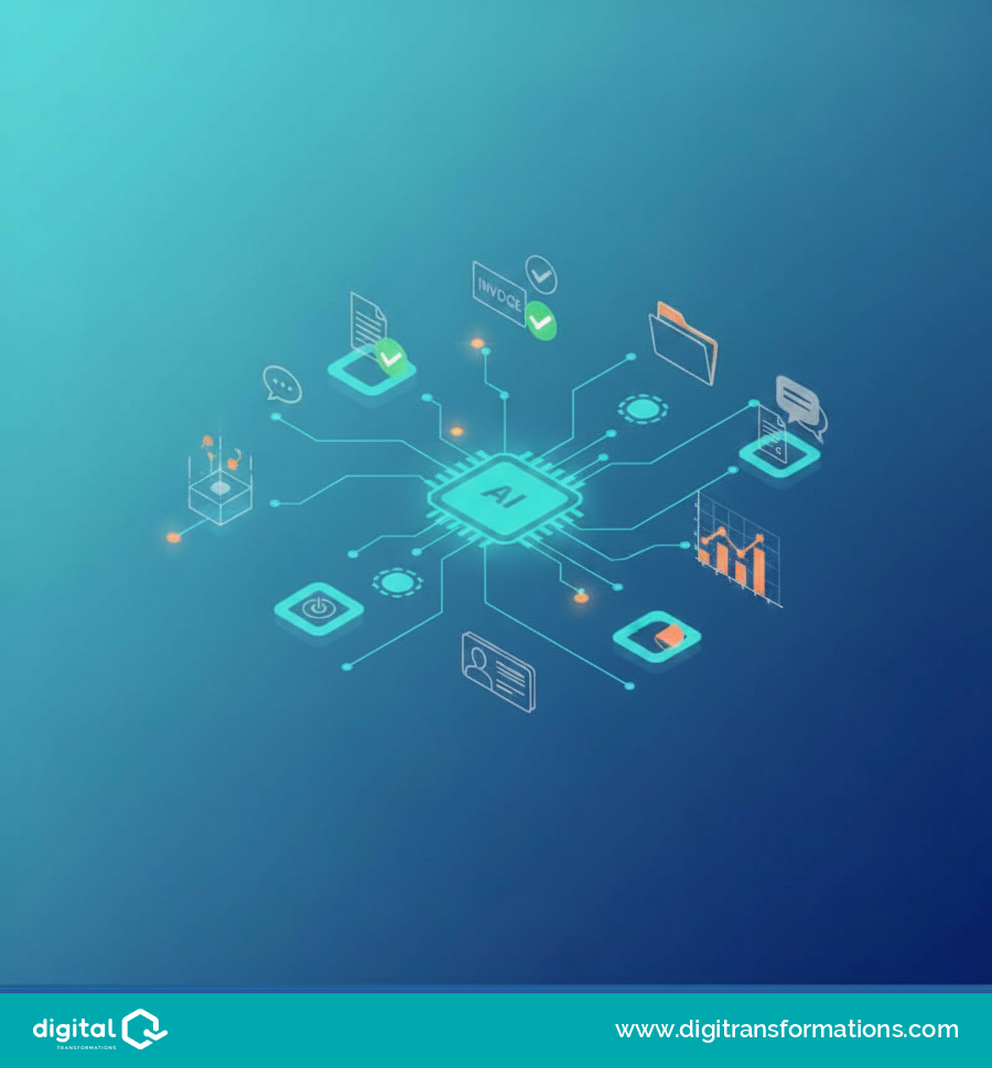
TL;DR: If you're wondering which processes to automate in a small business, start with the back office: onboarding, HR requests, internal support, document management, and reporting. These are repetitive, rule-based tasks that eat up hours without adding differentiated value. Automating them first is the fastest way to free up time, cut errors, and prepare your team for the next step with AI.
Why the back office is the best place to start
When a small business thinks about automation, it usually looks at sales or marketing first. That makes sense — it's where growth shows. But the back office, the internal processes that keep the business running, is in most cases where the investment pays back fastest.
These are tasks with clear rules, steady volume, and little room for creativity: a natural fit for automation and AI agents that can run with minimal supervision. And since they don't touch the external customer directly, there's more room to test and adjust, with lower risk.
The 5 back-office processes to automate first
1. Onboarding and training for new hires
Every new hire means explaining the same things over and over: internal policies, tools, first steps, real-world role-play. An AI training environment can take on much of that initial training, freeing up managers for what really adds value: judgment and team-specific context.
2. HR request management
Vacation, leave, new hires, certificates: processes with fixed rules that in many small businesses still run on emails and spreadsheets. An AI agent can receive the request, check the applicable policy, and resolve or escalate only what truly needs human judgment.
3. Internal support and helpdesk (IT and facilities)
"How do I reset my password?", "where's the printer manual?" — repetitive questions that eat into qualified people's time. An internal support agent solves the routine instantly and frees up the technical team for real issues.
4. Document management and filing
Contracts, policies, manuals, supplier invoices: finding the right document is still, in many companies, a slow manual task. AI-powered automation can classify, tag, and retrieve documents in seconds, with full traceability.
5. Reporting and data consolidation across tools
Copying data from one tool to another to build a weekly report is one of the least productive tasks around. Automating consolidation and reporting across systems gives real-time visibility, without spending hours "moving numbers around."
How do you know which one to automate first?
Not every business is at the same stage. Before diving in, it helps to know exactly where you stand and which specific process will deliver the highest return with the least friction. That's why Digital Transformations built a free digital maturity calculator: in a few minutes, it identifies where your business stands and what to automate first, based on your reality — not a generic checklist.
When it comes to onboarding, training, or customer service role-play, Dialog — our AI voice training environment — lets teams practice real scenarios, in multiple languages, with data hosted in the EU. Discover it at digitransformations.com/dialog.
Start where it shows the most
Automating the back office doesn't require a full company transformation — it requires choosing the right first process. Onboarding, HR, internal support, documentation, and reporting are the safest entry point with the fastest return.
Want to know where to start? Take the free digital maturity test: https://www.digitransformations.com/madurez-digital
Frequently asked questions
Where should I start automating in my small business?
Start with a back-office process that has clear rules and steady volume, like onboarding or HR request management. These deliver the fastest return with the lowest risk.
Is this relevant for my business, even if it's small?
Yes. Back-office automation doesn't depend on company size, just on having repetitive, rule-based tasks. The smaller the team, the more that freed-up time matters.
Do I need an in-house technical team to automate these processes?
No. Today's AI agents and automation tools can be implemented with the support of a specialized partner, without hiring dedicated technical staff.
How long does it take to see results?
Processes like internal support or document management usually show measurable improvement within weeks, not months, since they're contained, rule-based workflows.
Which process should I automate first?
The one that combines the highest volume of repetitive tasks with the lowest decision complexity. For most small businesses, that's usually onboarding or HR request management.
Related articles
The First Call That Decides If a Client Stays: AI Training for Customer Service Teams
At accounting and advisory firms, the hardest first call usually lands on the most junior person on the team. Rehearsing it first, with AI, changes the outcome.
Can Your Firm Use ChatGPT With Client Data? What GDPR and the AI Act Require
More professionals use ChatGPT for everyday tasks. But entering client data in the free version can break GDPR and, since August 2026, the AI Act too.
AI Is Already Saving Your SME Time. Why Isn't It Selling More?
83.8% of SMEs using AI see benefits, but only 21.6% see more sales (Hiscox, 2025). AI saves time; the next step is bringing it into customer-facing processes.