
AI Agent vs Chatbot: The Difference You Should Demand From Your Vendor
Everyone calls any chatbot an "AI agent." Learn the real difference and what to demand from your vendor before signing.

TL;DR: Everyone in the industry calls anything with a text box an "AI agent." A real AI agent doesn't just reply: it understands a goal, acts inside your systems, and self-corrects until the task is done. Before signing with a vendor, ask if their "agent" can complete a real action in your CRM, your calendar or your order — or if it just talks.
What is an AI agent, exactly?
An AI agent is a system that, unlike a rule-based chatbot, understands a goal, makes decisions, executes actions across several systems —not just replies— and self-corrects until it completes the task.
Here's a simple analogy. A chatbot is like a hotel receptionist who can only read the room list and tell you breakfast times: it answers, but it doesn't touch anything. An AI agent is that same receptionist, but with permission to change your reservation, charge the fee in the system, and tell housekeeping to prepare the room. The difference isn't how well it talks — it's what it can do after talking.
This isn't an engineer's technicality. It's the question that decides whether the project you're about to buy actually saves you hours of real work, or just gives you an FAQ with a friendly voice.
The typical mistake: buying a chatbot thinking it's an agent
The most common mistake is buying "an AI chatbot" thinking it's already an agent, when it actually only answers from a knowledge base without being able to act on the CRM (the system where you store your customer data), the calendar, or the order.
It's an easy trap because, when talking, both sound equally good. A modern language model (LLM) writes fluent answers whether it's backed by a simple text search or by a system capable of executing tasks. Fluent text tells you nothing about what that system can actually touch underneath.
The result, when discovered too late, is always the same: an assistant that handles the conversation well but, as soon as the customer asks to "change my appointment" or "cancel this order," has to hand off to a human. You paid to automate, and you still have the same bottleneck.
What to demand in the demo before signing
When your vendor says "AI agent," ask a single question: can it complete a real action in your systems, or does it just reply?
Ask for a live demo using a real case from your own business: have it modify a booking, update a record in your CRM, generate an order. If the demo stays at "I can answer any question about your catalog," you already have your answer.
Also ask what happens when the agent can't complete the task alone. A serious agent knows when to escalate to a person —what the industry calls human in the loop (HIL: a person steps into the process before a critical action is completed)— instead of pretending the job is done or leaving the customer stuck.
Is your company ready to move from chatbot to agent?
Moving from an assistant that only talks to a system that acts on your processes isn't a vendor switch — it's a jump in digital maturity level. You need processes clear enough for a system to run them without constant supervision, and systems connected to each other so the agent has something to act on.
Before signing with anyone, it's worth knowing exactly where your company stands: whether your processes, data and team are ready for that leap, or whether there are prior steps to take first. At Digital Transformations we design AI agents that genuinely act on business processes, with security by design in every build.
Before evaluating vendors, check with the Digital Maturity Calculator which areas your company is ready for that leap in: https://www.digitransformations.com/madurez-digital
Frequently asked questions
Is a chatbot with generative AI already an AI agent? Not necessarily. A generative AI chatbot can write very natural responses and still be unable to execute any action outside the conversation. What defines an agent is the ability to act on your systems, not the quality of the text it generates.
What does it mean for an agent to "self-correct"? It means that if a step fails —a piece of data doesn't fit, a system doesn't respond— the agent adjusts its next action to try to complete the goal, instead of stopping or giving a generic reply.
Are all my company's processes candidates for an AI agent? Not all of them. Processes with well-defined steps and connected systems are the best candidates. Very ambiguous processes, or ones that depend on ad hoc human judgment, still need direct supervision.
How do I know if my vendor is overselling by calling their product an "agent"? Ask for a demo with a real action on your own systems, not a sample environment. If it can only show you text replies, it's not an agent in the full sense of the word.
Shall we talk? https://www.digitransformations.com/
Content developed with AI assistance and reviewed by the Digital Transformations editorial team
Frequently asked questions
Is a chatbot with generative AI already an AI agent?
Not necessarily. It can write very natural responses and still be unable to execute any action outside the conversation. What defines an agent is the ability to act on your systems, not the text quality.
What does it mean for an agent to 'self-correct'?
If a step fails, the agent adjusts its next action to try to complete the goal, instead of stopping or giving a generic reply.
Are all my company's processes candidates for an AI agent?
Not all. Processes with well-defined steps and connected systems are the best candidates; very ambiguous ones still need direct supervision.
How do I know if my vendor is overselling by calling their product an 'agent'?
Ask for a demo with a real action on your own systems. If it only shows text replies, it's not a full agent.
Related articles
AI Audit: The Three Questions Your Auditor Will Ask (And How to Have Them Ready)
An AI audit doesn't ask about technology: it asks who can stop the system, what happens if the control fails, and where it's written down what it's allowed to do. Here are the three answers you need in writing.

What Breaks When You Connect More Than One AI System
A single AI agent is easy to watch over. The moment you connect a second one, three failures appear that didn't exist before. Here's what they are and how to fix them.
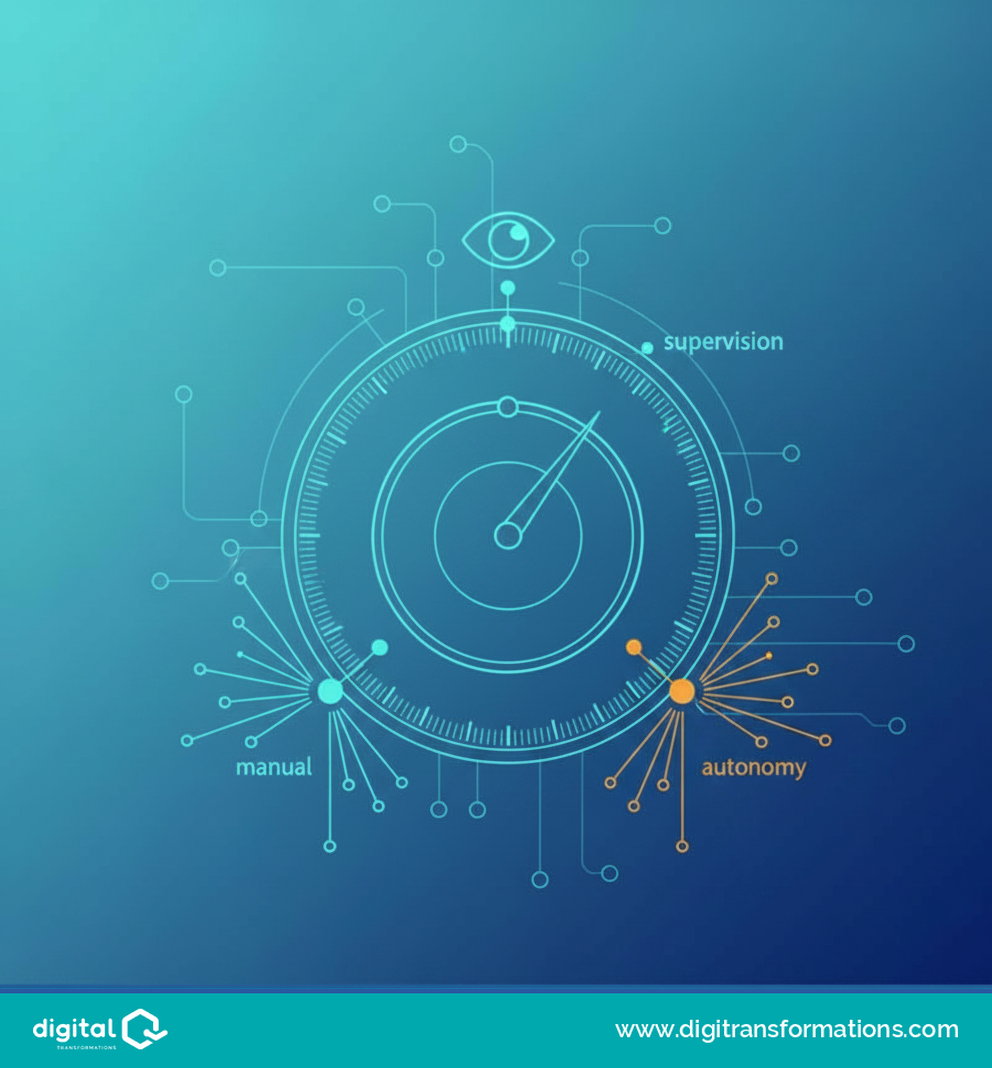
The Three Levels of AI Autonomy (and How to Choose the Right One)
AI autonomy isn't a switch, it's a dial. Here are the three levels that exist and how to choose the one your business actually needs.